Buying Land in Talking Rock for Your Future Mountain Home
June 4, 2026
June 4, 2026
Wondering if buying land in Talking Rock is the easy first step toward your future mountain home? It can be a great move, but in this part of North Georgia, the right parcel is about more than acreage and a pretty view. If you want to buy smart, you need to look closely at access, septic, zoning, and slope before you fall in love with a property. Let’s dive in.
Talking Rock offers a quieter mountain setting than some nearby North Georgia towns. The town describes itself as a small-town foothills community, and Pickens County planning materials show a land-use pattern shaped largely by forestry and single-family residential uses.
For many buyers, that means privacy, tree cover, and a more wooded feel. If your goal is a future cabin or mountain home, Talking Rock often stands out because it still feels rural rather than heavily built out.
That rural setting also comes with an important reality. In Talking Rock and the surrounding county, parcel-by-parcel buildability matters. A tract may look perfect online, but the true question is whether it can realistically support the home you want to build.
One of the biggest mistakes land buyers make is assuming more acreage automatically means more options. In Pickens County, planning materials note that soils, slope conditions, and the limited sewer service area can affect whether a site is practical for building.
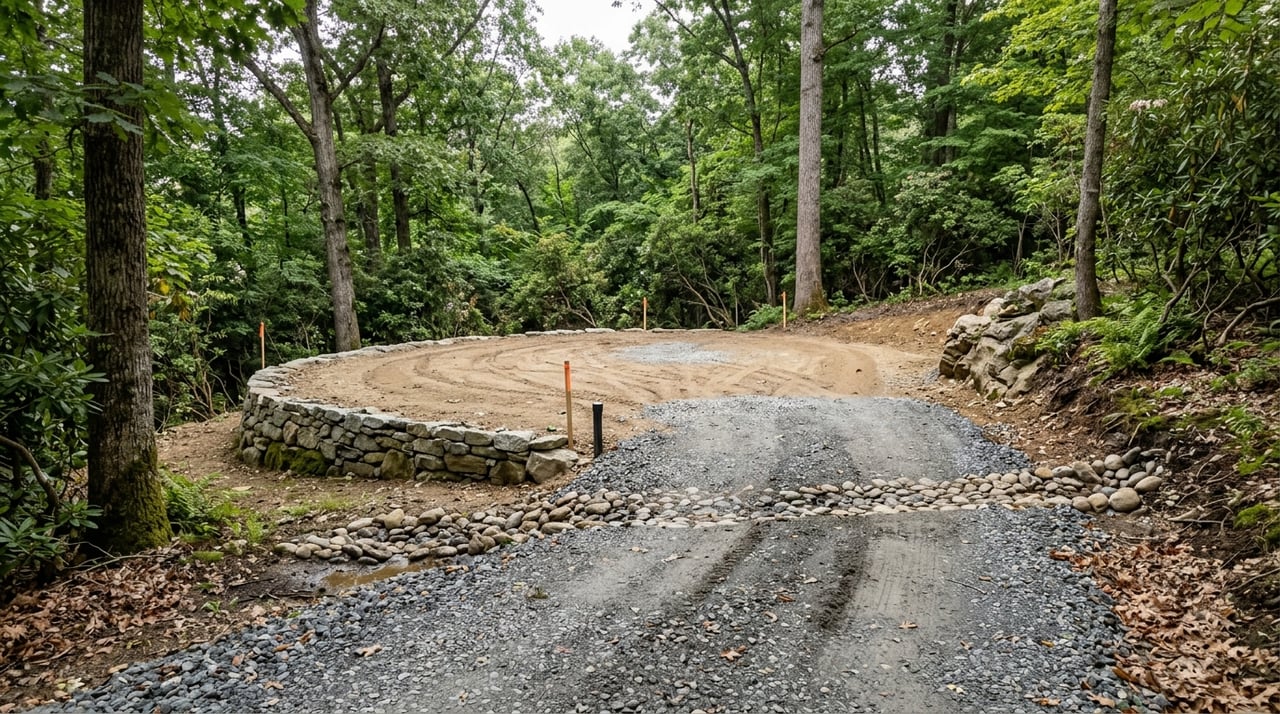
That matters because a future homesite needs more than space. You may also need suitable soils for on-site sewage treatment, workable driveway access, and a building area that fits the terrain.
In other words, five wooded acres may be less usable than a smaller parcel with better access and gentler topography. When you are buying land for a future mountain home, buildability should carry as much weight as the list price.
In unincorporated Pickens County, driveways and other access points onto county or public roads require an Access or Encroachment Permit before construction. If the driveway connects to a state highway, GDOT involvement may also be required.
That is a big reason to study road access early. A parcel with a long or steep driveway route may need more grading, drainage work, or design planning than you expected.
County permit guidelines also call for plat information, drainage details, and an approved culvert or drainage structure. That tells you access is not just a simple cut-in from the road. It is part of the full feasibility picture.
Pickens County notes that vacant land without an existing structure will not have a 911 address until a building permit is issued. If you are expecting deliveries, mapping, or utility coordination right after closing, that is worth knowing ahead of time.
This does not mean the property is a bad buy. It simply means raw land often works differently than improved property, and your timeline may depend on future permitting.
Pickens County operates a Water Department and publishes water service area maps. At the same time, county planning materials make clear that the public sewer service area is relatively small.
For many land buyers in the Talking Rock area, septic will be the more likely path unless the parcel has confirmed sewer access. That is why utility research should happen before your contract becomes final.
County building permit guidelines require a septic tank permit or authorization form before a building permit will be issued. The same guidelines say a level III soil evaluation must be completed before a septic permit application.
That is one of the most important facts for future home buyers. If the soil does not support the system you need, the parcel may not work for your plans the way you hoped.
The North Georgia Health District also says buyers who need a septic permit or septic drawing should contact the local Environmental Health office. Local board-of-health lot-size requirements can also apply, which is another reason to verify details early.
Talking Rock’s mountain setting is part of its appeal, but terrain can add complexity fast. Pickens County planning documents identify steep slopes, mountain ridges, floodplains, and sensitive water resources as important environmental factors.
The county also emphasizes preserving natural terrain, drainage, and vegetation where possible. For a buyer, that means the lot’s shape on a map may tell only part of the story.
A beautiful wooded parcel can still require significant grading or careful site design. Slope, drainage, and driveway engineering can influence your total cost just as much as the land price itself.
Before land-disturbing work begins, Pickens County says erosion and sediment control plans must go through the local issuing authority process, with state approval required before a local land-disturbance permit is issued. The county also requires a 7-Day Letter prepared by a qualified design professional.
You do not need to memorize every permit rule before shopping. You do need to understand that challenging topography may bring extra review, engineering, and planning steps.
This is one of the most important early questions: is the property inside the Town of Talking Rock or in unincorporated Pickens County? The answer affects which zoning code, permit office, and approval path apply.
For unincorporated Pickens County, the planning office handles rezonings, special use permits, plat approvals, building permits, and zoning enforcement. The county process also includes rezoning hearings and variance review through the Zoning Board of Appeals.
Inside the Town of Talking Rock, the town has its own zoning and building permit process. The town planning page says the R-A Residential Agriculture district has a minimum lot size of 2 acres, and the zoning map also identifies historic-district parcels.
Before you move forward on a land purchase, make sure you confirm:
These steps can save you from buying land that does not match your actual goals. A little upfront research can prevent a major setback later.
If you are still deciding where to buy, it helps to understand how Talking Rock differs from other North Georgia locations. The best fit depends on whether you want raw land, town services, or a more active setting.
Jasper, as the Pickens County seat, has city departments for planning and development, building, water and sanitation, police, and fire. The city also states that residents have water, sewer, and sanitation services.
Compared with Talking Rock, Jasper tends to offer a more infrastructure-focused setting. If you want a more rural parcel and are comfortable doing deeper feasibility work, Talking Rock may feel like a better fit.
Ellijay describes itself as an Appalachian Trail Community and highlights mountain vistas, rivers, shops, restaurants, and downtown events. That gives it a more amenity-oriented feel.
Talking Rock, by contrast, is generally quieter and more rural. If your vision is a private future mountain home rather than being close to a busier town center, Talking Rock may align better.
Blue Ridge is a small incorporated city with a tourism-focused downtown, festivals, scenic railway, and water and sewer service for roughly 2,500 customers. Its profile is denser and more visitor-oriented.
That makes Talking Rock feel more like a land-first market. Buyers looking for a wooded homesite with a quieter setting often appreciate that difference.
When you buy land in a mountain area, the right professionals can help you avoid expensive surprises. Based on county permit and land-disturbance requirements, it can make sense to involve a surveyor, local planning staff, environmental health or septic officials, and in tougher terrain, a civil engineer or other qualified design professional.
This is especially important if the driveway route looks steep, the building site is not obvious, or drainage could be an issue. Getting clear answers early can help you move forward with more confidence.
If you are considering land in Talking Rock for a future mountain home, keep this checklist handy:
These are the kinds of details that turn a pretty parcel into a practical long-term investment.
If you are looking at land in Talking Rock, the main thing to remember is simple: acreage alone does not tell the full story. The best land purchase is one where the view, the setting, and the feasibility all line up. With local guidance and careful research, you can find a property that truly fits your future mountain-home plans.
If you are ready to explore land in Talking Rock or want a second opinion on a parcel you are considering, Marilyn Drake can help you approach the process with practical local insight and steady guidance.
From finding the perfect North Georgia cabin to negotiating the best sale price, Marilyn is with you from start to finish. She combines deep knowledge of the Ellijay market with unwavering commitment. Let her make your buying or selling experience a complete success.
MARILYN DRAKE
329 RIVER ST ELLIJAY GA 30540